
I sought the LORD, and He answered me and rescued me from all my fears. Those who look to Him are radiant with joy; their faces will never be ashamed.
Psalm 34:4-5
by
Elizabeth
 Jun 08, 2026
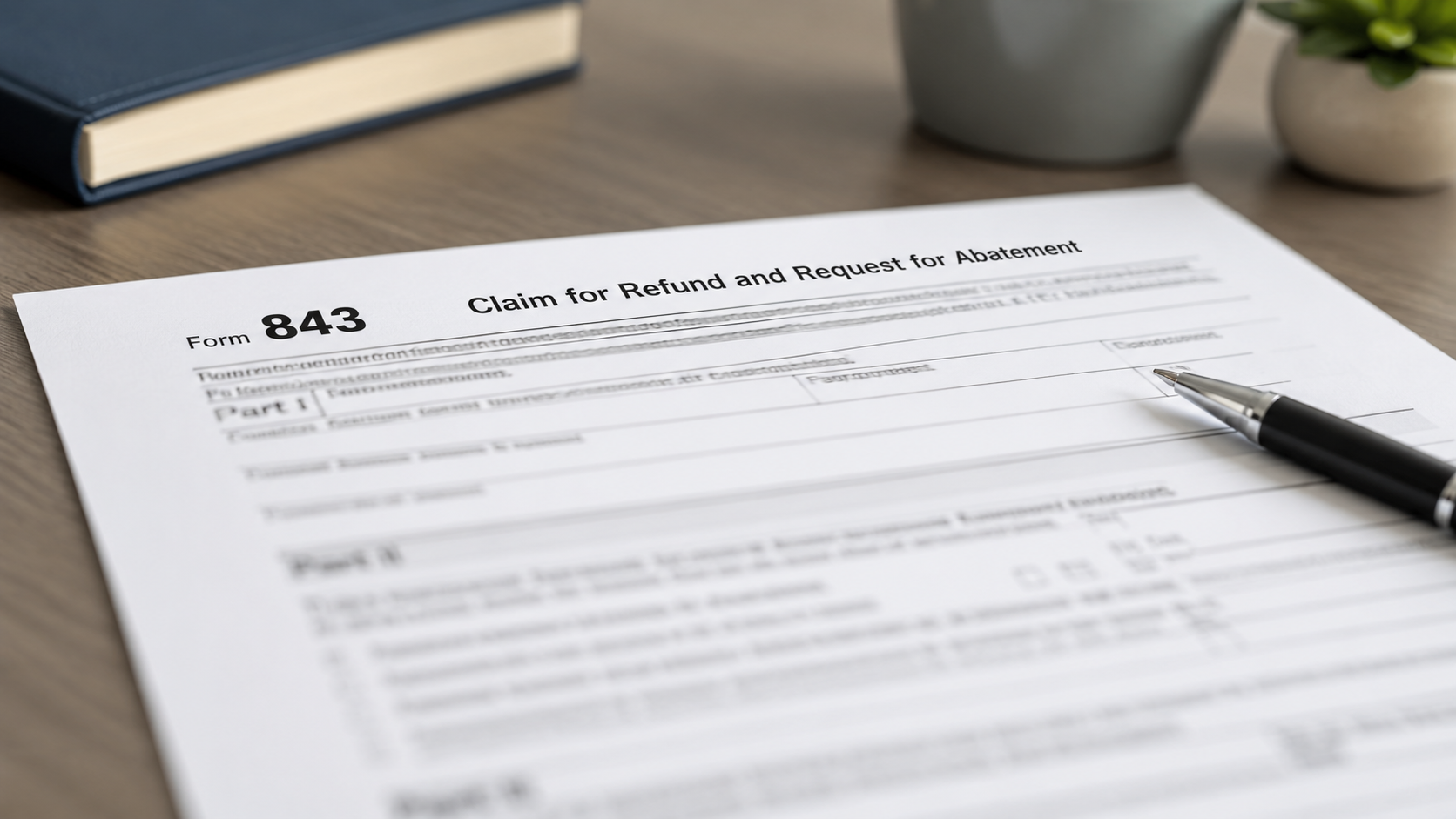
The Kwong case may give some taxpayers a chance to ask the IRS for a refund or removal of certain penalties and interest charged during the COVID disaster period. This is not automatic, and it is not guaranteed. Most taxpayers who may qualify need to file a protective refund claim, usually Form 843, by July 10, 2026, to protect their rights while the courts decide the issue.
Kwong v. United States is a federal court case about tax deadlines during the COVID-19 disaster period.
Terry Kwong had paid IRS penalties for older tax years. He later asked for those penalties to be refunded. The IRS denied some of his claims and said he waited too long to sue. Mr. Kwong argued that the COVID disaster relief rules gave him more time.
The Court of Federal Claims agreed with him on part of the case. The court said the COVID disaster period could postpone certain tax deadlines from January 20, 2020, through July 10, 2023. That made his lawsuit timely for some years. The court did not rule that every taxpayer automatically gets money back. It also did not rule in Mr. Kwong’s favor on every part of his case.
That is why this is important but uncertain. The case is still being fought, and the IRS does not agree with the broad refund argument.
Many IRS penalties and interest charges depend on a due date. For example, the IRS may charge a penalty because a return was filed late, tax was paid late, or estimated tax payments were not made on time.
The big question is this: If tax deadlines during the COVID disaster period were postponed until July 10, 2023, were some taxpayers really late?
If the courts say the IRS was wrong, some taxpayers may be able to recover penalties and interest they already paid. Others may be able to ask the IRS to remove penalties and interest they still owe.
The most likely items to review are federal IRS charges tied to a filing or payment deadline during the COVID disaster period. These may include:
This does not mean every penalty qualifies. The facts matter. The tax year matters. The type of penalty matters. The payment date also matters.
Possibly, but this is an area where taxpayers should be careful.
Some civil penalties are tied to deadlines. For example, IRS information return penalties can apply when a business does not file information returns, such as Forms 1099, correctly and on time, or does not furnish payee statements correctly and on time.
Because those penalties are tied to due dates, a business that paid a penalty for late or incorrect 1099 filings during the affected period may want to review the notice, transcript, and penalty code. A protective claim may make sense in some cases.
However, Kwong is mainly about deadlines. If the penalty was not really tied to a postponed deadline, or if it involved intentional disregard, fraud, state taxes, FBAR penalties, or another issue outside the Internal Revenue Code, it may not fit. Also, the IRS may fight these claims unless a higher court or new IRS guidance says otherwise.
A taxpayer may want to review this if they:
This is federal tax only. State tax penalties and interest do not automatically qualify just because the federal case exists.
|
Date / timing |
Why it matters |
|
January 20, 2020 |
The COVID-19 federal disaster period began for this issue. |
|
May 11, 2023 |
The federal COVID-19 disaster declaration ended. |
|
July 10, 2023 |
Under the broad reading of Kwong, the postponement period ended 60 days after the disaster declaration ended. |
|
July 10, 2026 |
Most affected taxpayers may need to file a refund claim or protective refund claim by this date. |
|
Two years from payment |
If the taxpayer paid the penalty or interest later, the deadline may be later than July 10, 2026. This depends on the facts. |
|
Six months after filing a refund claim |
If the IRS does not act within six months, a taxpayer may generally have the right to file a refund suit. |
|
Two years after IRS disallowance |
If the IRS formally denies the refund claim, a taxpayer generally has two years from the notice of disallowance to file suit. |
Taxpayers should not expect quick checks.
A protective claim is mainly a placeholder. It protects the taxpayer’s right to a refund while the legal issue is still being decided. The IRS often waits to act on protective claims until the legal issue is resolved. The Taxpayer Advocate has warned that this issue may take years to fully resolve.
A practical timeline could look like this:
In plain English: filing by the deadline may protect the right to money later, but it does not mean the taxpayer will receive money soon.
Kwong v. United States is a federal case about whether certain tax deadlines were postponed during the COVID disaster period. If the taxpayer-friendly view holds up, some IRS penalties and interest may have been charged too early or incorrectly.
No. Most taxpayers must file a refund claim or protective claim. The IRS is not expected to automatically send refunds at this time.
For many affected taxpayers, the key deadline is July 10, 2026. Some taxpayers may have a later deadline if they paid the penalty or interest later, because the two-year-from-payment rule may apply.
If the claim is for penalties or interest and not a change to the underlying tax return, many taxpayers will use IRS Form 843, Claim for Refund and Request for Abatement.
Possibly. If the penalty was tied to a deadline for filing or furnishing information returns during the affected period, it should be reviewed. But not all civil penalties will qualify.
There is no firm date. Protective claims may be held while the courts decide the issue, and that could take years. If the IRS ultimately loses, taxpayers may still need to provide final amounts and supporting documents before payment.
The Kwong case could be a major issue for taxpayers who paid IRS penalties and interest during the COVID disaster period. But it is not settled, and the IRS is fighting it. The safest step for potentially affected taxpayers is to review their records now and file a timely claim if there is a good-faith basis to do so.
If you received IRS penalties or interest during 2020, 2021, 2022, or the first half of 2023, please contact our office. We can help review the issue and determine whether it may be worth protecting your rights before the deadline.

Quick Answer: It may be time to raise your prices when your costs have gone up, you’re keeping less from each sale, or you’re doing…Read More

What a year of walking (and a still-messy desk) taught me about Darren Hardy’s book “We are what we repeatedly do.” Aristotle said that centuries…Read More

Quick Answer: A small-business worst-case plan should name someone who can make urgent decisions, explain how payroll and critical bills will be handled, identify where…Read More
Comments