
I sought the LORD, and He answered me and rescued me from all my fears. Those who look to Him are radiant with joy; their faces will never be ashamed.
Psalm 34:4-5
by
Elizabeth
 Jun 26, 2026
|
Quick Answer: First-time business owners should keep business and personal money separate, track income and expenses from day one, save for taxes, understand payroll and sales tax rules, and look at their numbers every month. A few simple habits early can prevent expensive cleanup later. |
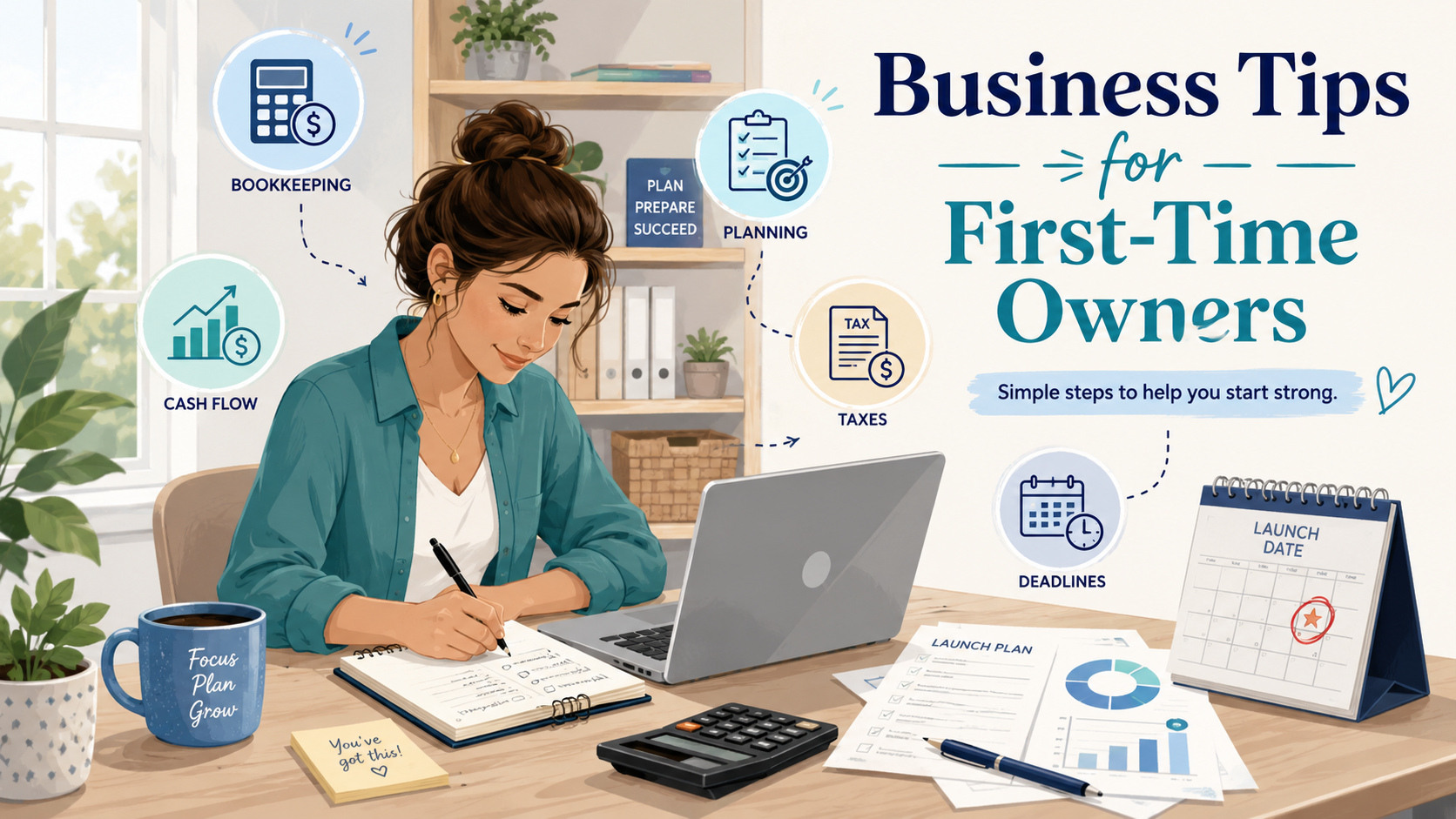
I was recently asked what tips I would give to a first-time business owner. As I thought through the answer, I realized it could be helpful for other new business owners, too.
Starting a business is exciting, but it can also feel like a lot. You are trying to sell, serve customers, keep up with money, and make the right choices. The good news is that you do not have to make everything complicated. You just need a few good systems from the beginning.
Here are practical tips that can help a new business owner start on a stronger foundation.
Open a business bank account and use it only for business income and business expenses. This makes your bookkeeping cleaner. It also makes tax time easier. When everything runs through one personal account, it is harder to know what really happened in the business.
First step: Open a separate business checking account before you start taking payments or paying bills.
Sales are not the same as profit. A business can bring in money and still lose money if the costs are too high. Know what it costs to provide your service or sell your product. Then price your work so there is enough left to pay expenses, taxes, and yourself.
First step: Make a simple list of your main costs before you set your prices.
Do not wait until tax season to organize your books. Bookkeeping is not just for filing a tax return. It helps you see if your business is healthy. Good books can show whether you are making money, spending too much, or growing too fast without enough cash.
First step: Choose a bookkeeping system and update it at least monthly.
New business owners are often surprised by taxes. If no one is withholding tax from your pay, you may need to make estimated tax payments during the year. You may also owe self-employment tax, income tax, sales tax, payroll tax, or other state and local taxes depending on your business.
First step: Move money for taxes into a separate savings account each month so it is not spent by mistake.
Sales tax and payroll tax are two areas where mistakes can get expensive. If you sell taxable products or services, you may need to register, collect tax, file returns, and pay the state. If you have employees, payroll taxes must be handled correctly and on time.
First step: Ask before you start selling in a new state, hiring employees, or paying workers as contractors.
A sole proprietorship, LLC, partnership, corporation, and S corporation are not all taxed the same way. An LLC is a legal setup, but it does not automatically mean you save taxes. An S corporation can help in the right situation, but it also adds payroll, tax filings, and rules you must follow.
First step: Talk with a CPA and attorney before choosing or changing your business structure.
Many businesses need more than an EIN. You may need a state tax account, sales tax permit, payroll account, local business license, professional license, or other permit. The exact list depends on your state, city, industry, and what you sell.
First step: Make a registration checklist before you open, hire, or start collecting payments.
Good records help prove your income and expenses. They also help you answer questions if you are audited or if a lender asks for support. Keep receipts, bank statements, loan documents, payroll reports, sales tax filings, and big purchase records in a safe place.
First step: Create digital folders by year and category so documents are easy to find later.
Profit means your business made money on paper. Cash flow means you actually have money available to pay bills. A business can be profitable and still struggle if customers pay late, inventory is too high, loan payments are large, or taxes were not set aside.
First step: Look at your bank balance, accounts receivable, bills due, debt payments, and tax savings every month.
How you pay yourself depends on your business structure. A sole proprietor usually takes owner draws. An S corporation owner who works in the business usually needs reasonable payroll. A partnership has different rules. Paying yourself the wrong way can cause tax problems later.
First step: Ask how you should take money from the business before you start moving money to yourself.
You do not need to understand every accounting term, but you should know the basics. Look at your profit and loss, bank balance, payroll costs, debt, and taxes owed. If something looks wrong, ask questions early.
First step: Set one day each month to review your business numbers.
Many problems are easier and cheaper to fix early. It is better to ask before you hire your first employee, choose your entity, start selling online, fall behind on sales tax, or wait a full year to do bookkeeping.
First step: Build a small team: a CPA, an attorney, a banker, and insurance support when needed.
First-time business owners do not need perfect systems. They need clear, simple systems they will actually use. Start with clean records, separate accounts, tax planning, and monthly review. Those habits can help you make better decisions and avoid many common mistakes.
If you are starting a business or trying to clean up a new one, it is worth getting guidance early. A little planning now can save time, stress, and money later.
What should a first-time business owner do first?
Start by separating business and personal money, tracking income and expenses, and learning what tax accounts or licenses may apply to your business.
Do I need a CPA when I start a business?
Not every new business needs the same level of help, but a CPA can help you understand taxes, bookkeeping, payroll, and how to avoid problems early.
How much should a new business save for taxes?
There is not one number that fits everyone. It depends on your profit, tax structure, state, payroll, and sales tax rules. A safe starting point is to set aside money each month and adjust after reviewing your actual numbers.
Is an LLC the same as a tax savings plan?
No. An LLC is a legal structure. It does not automatically lower your taxes. Tax treatment depends on how the business is set up and whether an election is made.
When should I start bookkeeping?
Start as soon as money begins moving in or out of the business. Waiting until year-end can cause missed deductions, tax surprises, and cleanup costs.
This article gives general information for business owners. It is not legal or tax advice for a specific situation. Your business structure, state, industry, and facts can change the answer. Talk with a qualified professional before making major decisions.

Quick Answer: It may be time to raise your prices when your costs have gone up, you’re keeping less from each sale, or you’re doing…Read More

What a year of walking (and a still-messy desk) taught me about Darren Hardy’s book “We are what we repeatedly do.” Aristotle said that centuries…Read More

Quick Answer: A small-business worst-case plan should name someone who can make urgent decisions, explain how payroll and critical bills will be handled, identify where…Read More
Comments